
The Future of Business: What to Expect in a Rapidly Evolving Landscape
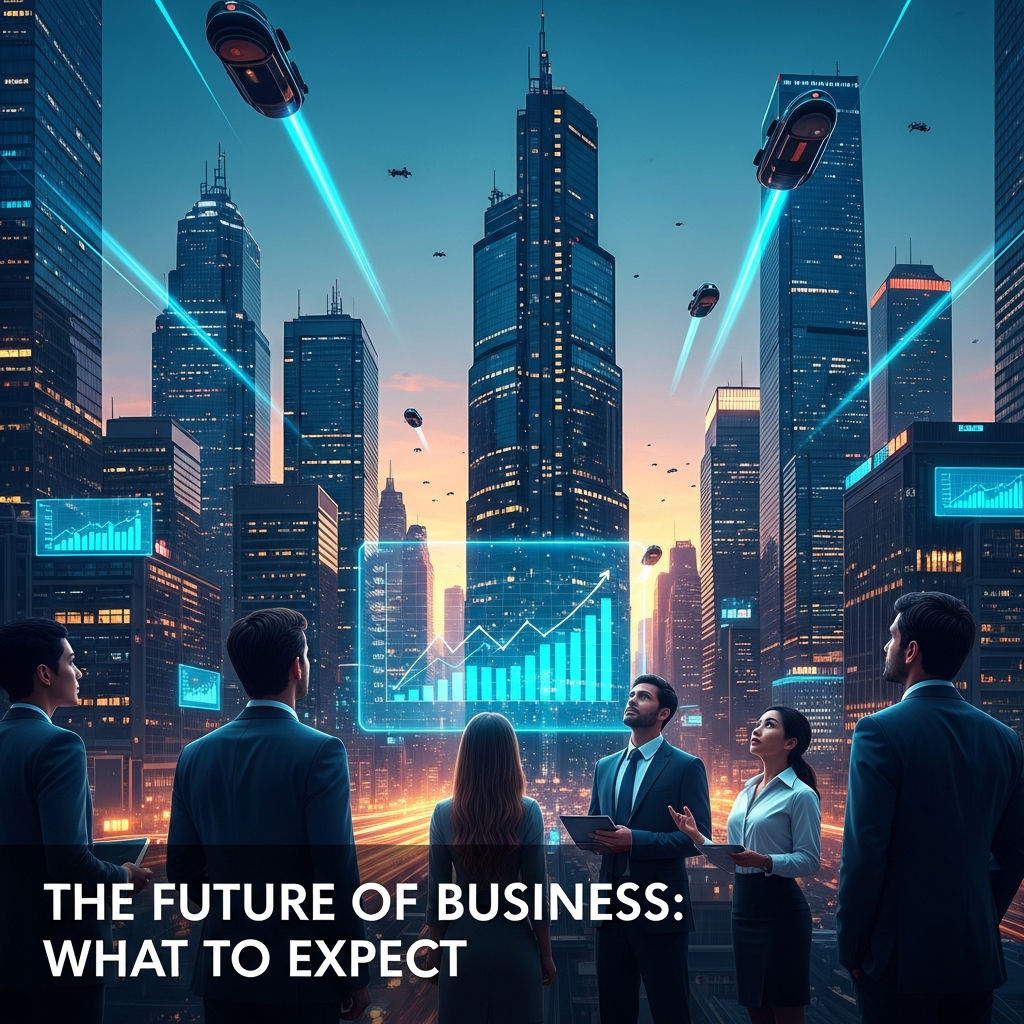
The business world is on the precipice of unprecedented transformation. Driven by rapid technological advancements, shifting societal values, and an increasingly interconnected global economy, the future of business promises to be dynamic, challenging, and filled with immense opportunities. Companies that anticipate these changes and proactively adapt will not only survive but thrive. From artificial intelligence reshaping operations to sustainability becoming a core business imperative, understanding what to expect is crucial for any forward-thinking leader.
Technology as the Ultimate Disruptor and Enabler
Technology has always been a catalyst for change, but its current pace of evolution is unparalleled. The coming years will see an even deeper integration of advanced technologies into every facet of business, fundamentally altering how products are made, services are delivered, and decisions are made.
Artificial Intelligence (AI) and Machine Learning (ML)
- Hyper-Personalization: AI will drive even more sophisticated customer experiences, predicting needs and preferences with uncanny accuracy across marketing, sales, and service.
- Operational Efficiency: From predictive maintenance in manufacturing to intelligent automation of routine tasks, AI will streamline operations, reduce costs, and free up human capital for more strategic work.
- Augmented Decision-Making: AI-powered analytics will provide deeper insights, enabling businesses to make data-driven decisions faster and with greater confidence.
Automation and Robotics
Beyond traditional industrial robots, Robotic Process Automation (RPA) will continue to automate administrative tasks, while sophisticated collaborative robots (cobots) will work alongside humans in various settings, enhancing productivity and safety.
Blockchain Technology
While often associated with cryptocurrency, blockchain’s potential extends far beyond. It will increasingly be used for secure supply chain management, verifiable digital identities, intellectual property rights, and transparent financial transactions, building trust and reducing fraud.
Internet of Things (IoT) and 5G Connectivity
The proliferation of IoT devices, coupled with the lightning-fast speeds of 5G, will create vast networks of interconnected data points. This will enable real-time monitoring, smart infrastructure, and new data-driven services across industries from healthcare to logistics.
Quantum Computing
Though still in its nascent stages, quantum computing holds the promise to revolutionize complex problem-solving, data encryption, and material science, offering unprecedented computational power that could redefine industries.
The Evolving Nature of Work and the Workforce
The traditional concepts of the workplace and employment are being reshaped by technological advancements and shifting societal expectations. The future workforce will be characterized by flexibility, continuous learning, and human-AI collaboration.
Remote and Hybrid Work Models
The pandemic accelerated the adoption of remote work, proving its viability for many sectors. Hybrid models, combining in-office and remote work, are likely to become the standard, offering employees greater flexibility and companies access to a wider talent pool.
The Gig Economy and Fluid Workforce
Freelancers, contractors, and independent workers will continue to comprise a significant portion of the global workforce. Businesses will increasingly leverage a fluid workforce for specialized skills and project-based work, requiring agile talent management strategies.
Skills Gap and Lifelong Learning
As technology evolves, the demand for new skills will outpace existing educational systems. Continuous learning, reskilling, and upskilling will be critical for both individuals and organizations to remain relevant and competitive. Emotional intelligence, creativity, critical thinking, and digital literacy will be paramount.
Human-AI Collaboration
The future workplace will not be about humans versus machines, but humans *with* machines. AI will augment human capabilities, taking over repetitive tasks and providing insights, allowing humans to focus on innovation, complex problem-solving, and interpersonal interactions.
Redefining Customer Experience (CX)
Customers of the future will demand more than just products or services; they will expect seamless, personalized, and ethically aligned experiences. Businesses that prioritize CX will build lasting loyalty.
Hyper-Personalization at Scale
Leveraging AI and data analytics, businesses will deliver incredibly personalized journeys, anticipating needs and offering relevant solutions across all touchpoints, from marketing communications to post-purchase support.
Immersive and Experiential Commerce
Technologies like Augmented Reality (AR) and Virtual Reality (VR) will create immersive shopping experiences, allowing customers to try on clothes virtually, visualize furniture in their homes, or test-drive cars from anywhere.
Ethical Consumption and Brand Transparency
Consumers, particularly younger generations, are increasingly prioritizing ethical considerations. They will demand transparency regarding supply chains, labor practices, and environmental impact. Brands that align with these values will gain a significant competitive edge.
Sustainability and Ethical Business Practices
Sustainability is no longer a niche concern; it’s a fundamental pillar of future business success. Environmental, Social, and Governance (ESG) factors will influence investment decisions, consumer choices, and regulatory frameworks.
Circular Economy Principles
Moving away from the linear “take-make-dispose” model, businesses will increasingly adopt circular economy principles: designing products for longevity, repairability, recycling, and reuse, minimizing waste and resource depletion.
Renewable Energy and Decarbonization
Companies will face increasing pressure and incentives to transition to renewable energy sources and significantly reduce their carbon footprint across their operations and supply chains.
Corporate Social Responsibility (CSR) as Core Strategy
Authentic CSR initiatives, integrated into core business strategy rather than treated as an add-on, will be vital for attracting talent, building brand reputation, and meeting stakeholder expectations.
Globalisation, Geopolitics, and Supply Chain Resilience
The global business landscape remains complex, influenced by geopolitical tensions, trade shifts, and the ongoing need for resilient supply chains.
Supply Chain Diversification and Regionalization
Lessons learned from recent disruptions will lead to greater diversification of supply chains, with many companies opting for more regional production and closer partnerships to mitigate risks.
Digital Trade and Cross-Border E-commerce
Digital platforms will continue to facilitate global trade, enabling even small businesses to reach international markets with greater ease, though navigating varied regulations will remain a challenge.
New Business Models and Entrepreneurial Spirit
Innovation in business models will continue to be a hallmark of the future, driven by technological capabilities and evolving consumer needs.
- Subscription Economy: The “as-a-service” model will expand beyond software to physical products and even experiences.
- Platform Business Models: Companies that connect buyers and sellers, creators and consumers, will continue to thrive and diversify.
- Direct-to-Consumer (D2C): Brands will increasingly bypass traditional intermediaries to build direct relationships with their customers.
Agility and Resilience: The Imperatives for Survival
In a world characterized by volatility, uncertainty, complexity, and ambiguity (VUCA), the ability to adapt quickly and recover from shocks will be paramount. Businesses must build organizational agility into their DNA.
- Adaptive Strategies: Continuously monitoring trends and adjusting strategies will be more important than rigid, long-term plans.
- Scenario Planning: Preparing for multiple future possibilities will help businesses navigate unforeseen disruptions.
- Culture of Innovation: Fostering an environment where experimentation, learning from failure, and continuous improvement are encouraged.
Conclusion: Navigating the Next Era of Commerce
The future of business is not a distant concept; it’s unfolding now. It’s a landscape defined by advanced technology, an evolving workforce, empowered consumers, and a profound commitment to sustainability. Success will hinge on a proactive approach to digital transformation, a dedication to lifelong learning, an unwavering focus on customer and employee experience, and an authentic embrace of ethical and sustainable practices.
Businesses that are agile, innovative, and purpose-driven will not only lead the market but also contribute positively to a more sustainable and equitable global economy. The time to prepare for this exciting and challenging future is now.