


Govt to fund deepwater drilling but recoup costs from winners
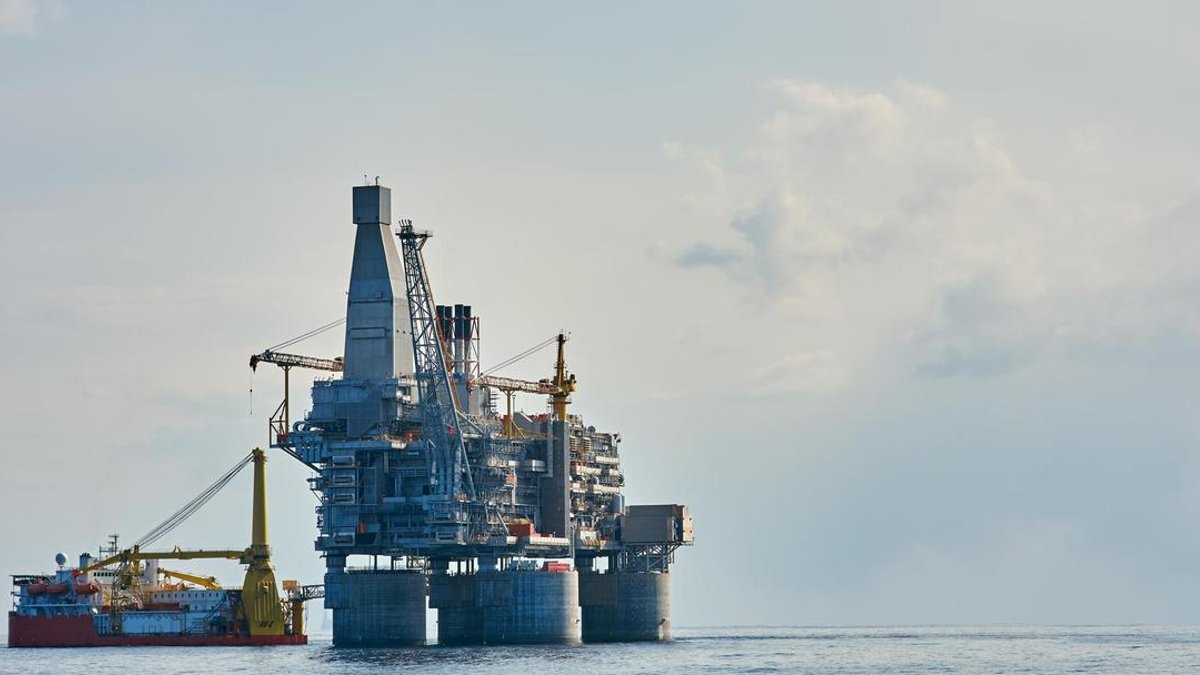
In cases where drilling yields no results, the state assumes the financial burden. This repayment mechanism, detailed in the latest operational directives, forms the core agreement: the state takes on the initial geological risk while securing a claim on potential gains.
The directives specify that repayment commences either seven years after commercial production begins or once the operator recovers 50% of its exploration and development costs, whichever happens first. Payments are made annually in installments without any adjustment for inflation. The scheme will support 60 wells in deepwater (over 400 meters) and ultra-deepwater (beyond 1,500 meters) zones. Applications are restricted to state-owned enterprises or consortia they spearhead.
Funding is tied to project milestones: 40% is disbursed when drilling reaches 40% of the approved depth, and the remaining 60% is released upon completion and validation of the well report. By these limits, well-related support alone could total Rs 43,200 crore, representing roughly half of the overall allocation. The guidelines do not specify a breakdown of expenditures by category. The initiative spans FY2030-31, with FY2026-27 serving as a preparatory year and FY 2027-28 through FY2030-31 as Phase I.
Eligibility requires that wells be drilled in blocks awarded under the Revenue Sharing Contract framework, specifically those granted in bid rounds from 2016 onward. Production-sharing and coal-bed methane blocks approved before that period are ineligible unless the government issues a directive to the contrary. Only exploration wells or those targeting new resource discoveries qualify for funding; development wells and sidetrack wells are excluded.
Prime Minister Narendra Modi introduced the scheme during his August 15, 2025 Independence Day address, stating India aims “to work in a mission mode towards finding oil and gas reserves under the sea.” Petroleum Secretary Neeraj Mittal, in the guidelines’ preface, described the plan as “the most ambitious upstream oil and gas intervention undertaken in recent times” and projected it could add “more than 600 million tonnes of oil equivalent” to national reserves.
The financial assistance aims to alleviate the upfront costs of exploration while enabling the government to recoup investments upon project success. Operators must still cover expenditures beyond the support caps and risk losing eligibility if they fail to fulfill work obligations or settle penalties in lieu of drilling commitments. This funding alters the risk-reward balance for deepwater ventures, significantly lowering the financial strain of speculative drilling in challenging environments. The support reduces barriers for state firms, enabling them to pursue exploration projects previously deemed too costly without guaranteed returns.
Support for Manufacturing Infrastructure Zones
Proposals must pass through the Public Investment Board before the minister approves spending. A third funding track will cover oil and gas manufacturing and services zones. These zones will include utilities, berthing and load-out jetties, warehouses, and testing and certification laboratories.
The guidelines aim to make India a key global manufacturing-fabrication yard as deepwater activity grows. Developers must secure land and clearances, then market the zone to tenants. States are invited to assist with land, approvals, and utilities. The Infrastructure Appraisal Board must shortlist locations within 60 days.
Data and Data Security
The initiative relies on a seismic data program administered by the Directorate General of Hydrocarbons (DGH). Two-dimensional surveys receive full government funding, with contractors gaining no resale rights. Three-dimensional surveys operate under a multi-client model, where contractors co-invest, retain licensing revenue, and bear sales risk. The guidelines were released on October 25, 2026.


